What is the Gegenpressing tactic, and why has it become one of the most debated and admired strategies in modern football? For many fans, it’s more than just a defensive method; it represents an entire philosophy that changed how the game is played. By turning the chaotic moments after losing possession into opportunities to attack, Gegenpressing has redefined the way teams think about transitions. But what makes this approach so powerful, and why is Jürgen Klopp seen as the mastermind who perfected it?
The roots of this high-intensity style lie deep within the German coaching school, yet it was Klopp who took the idea from theory to global recognition. At Borussia Dortmund and later Liverpool, his sides became famous for suffocating opponents the instant they lost the ball. Instead of retreating, players surged forward in coordinated waves of pressure, forcing mistakes and creating scoring chances within seconds. This relentless energy not only thrilled fans but also forced rival managers to rethink their strategies.
A New Era of Football Philosophy
By making pressing after possession loss the first defensive instinct, Gegenpressing redefined transitions. It became not just a defensive weapon but an attacking launchpad.
From Germany to the Premier League Spotlight
Though the roots of this idea can be traced back to Germany, Spain, and even Dutch football, it was Jürgen Klopp’s Liverpool that made it a global spectacle. The sheer intensity with which his players executed the tactic forced everyone—fans, pundits, and even rival Premier League managers—to recognize its power.
The Origins of Gegenpressing
The German Coaching School and Tactical Innovation
Germany’s coaching education system has long emphasized structured thinking and collective play. As clubs looked for new ways to break defensive lines, coaches like Ralf Rangnick laid down the tactical principles that would later inspire Klopp.
Early Examples Before Jürgen Klopp
While Klopp popularized the word “Gegenpressing,” variations existed earlier. Teams like Arrigo Sacchi’s AC Milan and Johan Cruyff’s Barcelona used organized pressing systems. However, Klopp’s interpretation stood out for its ferocity and speed, which gave it a distinct identity.
Jürgen Klopp and the Rise of Gegenpressing
From Mainz to Borussia Dortmund
Klopp’s coaching career began at Mainz, where his aggressive, pressing-oriented football earned attention. But it was at Borussia Dortmund where Gegenpressing became legendary. Dortmund’s 2011 and 2012 Bundesliga-winning sides overwhelmed opponents with relentless pressing and quick transitions.
Transformation at Liverpool
When Klopp arrived at Liverpool in 2015, he described his football as “heavy metal” compared to the more patient style of possession-based teams. Over time, Liverpool became a perfect case study for Gegenpressing, balancing chaos with structure.
Counter-Pressing Explained: The Core of the Tactic
Immediate Pressure After Losing the Ball
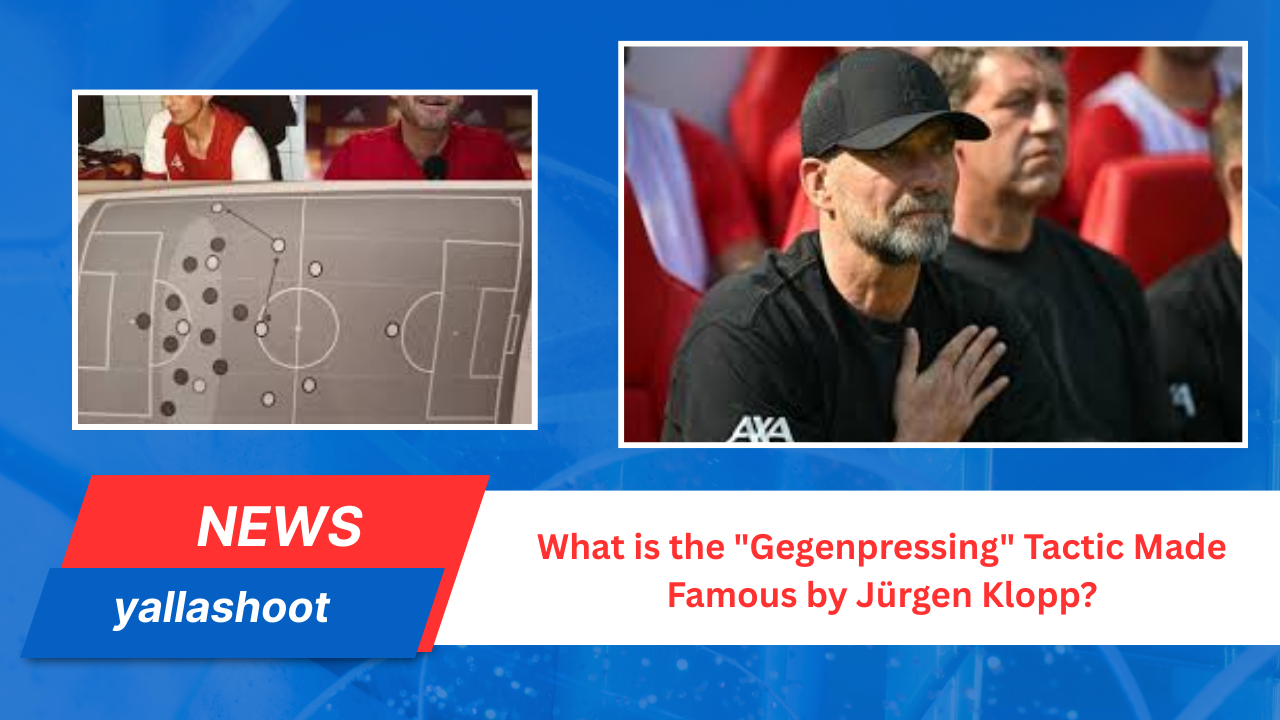
The idea is simple: within seconds of losing possession, the nearest players swarm the ball carrier.
Shaping Opponents’ Passing Options
It’s not just about chasing the ball—it’s about cutting passing lanes, forcing errors, and regaining possession in dangerous zones.
High-Intensity Pressing: Why It Works
The Physical Demands on Players
This tactic requires supreme fitness levels. Players must sprint repeatedly, with no time to relax.
The Psychological Advantage Over Opponents
Opponents feel trapped. Even after gaining possession, they cannot breathe before facing immediate pressure.
Tactical Principles of Gegenpressing
Compactness and Team Shape: Players stay close together, reducing spaces between lines
Trigger Movements and Pressing Traps: Teams identify cues—such as a back pass or slow touch—to initiate pressing
Role of Midfielders and Attackers: Forwards are the first defenders, midfielders the hunters, and defenders the safety net
How Gegenpressing Differs from Other Pressing Styles
| Feature | Gegenpressing | Traditional Pressing | Possession Football |
|---|---|---|---|
| Timing | Immediately after losing ball | After shape is regained | Slower recovery |
| Objective | Win ball in dangerous zones | Prevent opponent build-up | Keep control |
| Style | Chaotic but structured | Organized block | Patient passing |
Case Study: Liverpool Under Jürgen Klopp
Key Matches Where Gegenpressing Shone
Liverpool vs Manchester City (2018 Champions League)
Liverpool vs Barcelona (2019 UCL Semi-Final comeback)
Statistical Evidence of Success
Liverpool’s pressing intensity has been measured by football match analysis tools such as PPDA (passes per defensive action), often ranking among the best in Europe.
Advantages and Limitations of Gegenpressing
The Benefits for Teams
Creates scoring chances quickly
Reduces defensive vulnerability
Exhausts the opponent
The Risks and Weaknesses
Requires extreme fitness
Leaves space if the press is broken
Demands total team coordination
Gegenpressing in Modern Football Beyond Klopp
Other Coaches Influenced by the Style
Pep Guardiola (adapted pressing in his possession game)
Julian Nagelsmann
Thomas Tuchel
Future Evolution of Counter-Pressing
As fitness levels improve and tactical analysis grows sharper, Gegenpressing may evolve into hybrid systems blending pressing with ball retention. Coaches worldwide are now studying pressing efficiency in every major tactical battle.

FAQs about Gegenpressing
Q1: What is the “Gegenpressing” tactic in football?
It’s a strategy where teams immediately press opponents after losing possession to quickly regain control.
Q2: Why is Jürgen Klopp famous for Gegenpressing?
Because he perfected it at Dortmund and Liverpool, showing how it can win league titles and European trophies.
Q3: How is Gegenpressing different from normal pressing?
Normal pressing often waits for defensive shape. Gegenpressing acts instantly after possession loss.
Q4: What are the risks of Gegenpressing?
It’s physically demanding and risky if opponents bypass the press, leaving space behind.
Q5: Which teams use Gegenpressing today?
Liverpool, RB Leipzig, Bayern Munich, and even Manchester City use variations of it.
Conclusion: Why Klopp’s Gegenpressing Changed the Game
The question “What is the ‘Gegenpressing’ tactic?” can no longer be answered simply as pressing after losing the ball. It has grown into a philosophy, a way of reshaping football itself. Jürgen Klopp’s high-intensity pressing didn’t just win trophies; it changed how the world saw transitions in football.
By combining structure with chaos, Klopp’s style inspired a generation of coaches and players. Gegenpressing remains one of the most defining tactical innovations of modern football—and it’s here to stay.