

Are Retro Football Shirts a Good Investment? This is the question echoing across football communities, vintage markets, and online collector forums. Retro football shirts are more than just sportswear, they’re cultural artifacts stitched with stories of iconic goals, legendary players, and unforgettable tournaments. Fans across the world are increasingly turning to these classic jerseys, not only for their nostalgic pull but also for their surprising financial potential.
Imagine holding a shirt worn during a famous World Cup final or a kit designed in the golden era of 90s football. That piece of fabric is more than clothing—it’s a direct connection to football history. Collectors see it as a treasure chest of memories, while investors recognize it as an asset that can appreciate in value, sometimes reaching thousands at auctions. But the question remains: do all retro football shirts carry the same investment potential, or are only a select few worthy of being considered valuable assets?
In this collector’s guide, we’ll explore the history of classic football kits, examine the factors that make a retro jersey valuable, and provide practical tips on building a collection that balances passion with smart investment choices. By the end, you’ll have a clear view of whether investing in retro football shirts is just a trend—or a strategy with real long-term potential.
Are Retro Football Shirts a Good Investment?
Understanding the investment potential of retro shirts
Retro shirts can indeed be an investment, but not all jerseys appreciate equally. A standard replica may hold sentimental worth, but a limited-edition or match-worn kit has a much higher chance of growing in value.
The role of rarity, condition, and demand in valuation
Rarity – Limited production runs or discontinued designs drive scarcity.
Condition – A shirt in mint, unworn state can be worth five times more than a damaged one.
Demand – Popular players, clubs, and tournaments influence how much collectors are willing to pay.
Comparing retro shirts with other collectibles
Unlike trading cards or coins, retro shirts are wearable, cultural items with universal appeal. They combine history, design, and identity, which broadens their market compared to niche collectibles.
The History Behind Collecting Classic Football Kits
From terraces to auctions: The evolution of football shirt collecting
The journey began in the stands, with fans proudly wearing replicas. By the 2000s, online platforms transformed collecting into a global phenomenon, where rare jerseys moved from wardrobes to high-profile auction houses.
Key eras and iconic designs that shaped the hobby
1970s: Minimalist designs with few sponsors.
1980s: Bold patterns and colorful kits.
1990s: Experimental and artistic designs that became fashion icons.
Why 90s football kits are especially in demand
The 90s are considered the golden era for retro football shirts. Designs like Arsenal’s “bruised banana” or Germany’s Italia ’90 kit symbolize a unique style that resonates with both football and fashion lovers.
What Makes a Retro Shirt Valuable?
Limited editions and match-worn shirts
Authenticity is everything. Match-worn shirts, especially those tied to historic games, command record-breaking prices.
The influence of legendary players and memorable matches
A shirt once worn by Diego Maradona or Lionel Messi becomes instantly iconic. Jerseys tied to finals, like Champions League or World Cup victories, carry a premium.
Manufacturer branding and historical sponsorships
Adidas, Umbro, and Kappa dominate the vintage scene. Old sponsors, such as JVC or Sharp, now add a nostalgic layer that increases demand.
Rare Jerseys and Their Market Value
Case study: Iconic rare shirts that sold for record prices
Maradona’s 1986 “Hand of God” shirt sold for £7 million.
A Brazil 1970 Pele match-worn jersey fetched hundreds of thousands.
How auctions and online platforms set shirt valuation
Christie’s and Sotheby’s have legitimized football shirt auctions, while eBay and niche sites create vibrant secondary markets.
Examples of undervalued shirts now worth thousands
A 1994 Nigeria World Cup shirt or Japan’s 1998 kit once cost under $50 but now sell for hundreds or even thousands.
Practical Investment Guide for Collectors
How to start your collection wisely
Research clubs, eras, and players.
Begin with affordable classics before moving into rare shirts.
Build connections in collector forums for trustworthy deals.
Tips for preserving shirts in mint condition
Store in garment bags with acid-free materials.
Avoid folding to prevent creases.
Keep away from sunlight to stop fading.
Where to buy authentic retro shirts safely
Trusted online retailers, auction houses, and collector conventions remain the safest options for authentic purchases.
Risks of Investing in Retro Football Shirts
The rise of fakes and replicas
Counterfeits are a growing issue. Some fake shirts are so advanced that authentication services are essential.
Market volatility and changing fan interests
Shirt values rise and fall with trends. What’s valuable today might lose appeal tomorrow.
The risk of overpaying for hype-driven jerseys
Not all shirts retain value—some are overpriced due to temporary hype.
Retro Shirts vs Other Collectibles
Comparing football shirts to trading cards, sneakers, and autographs
Retro shirts blend fashion and sport, unlike trading cards or autographs, which remain purely collectible. Sneakers rival shirts in demand, but football kits often carry stronger cultural connections.
Long-term stability of sports memorabilia markets
Football shirts benefit from global fandom, ensuring ongoing demand, but like all collectibles, they’re not risk-free.
Future Trends in Collecting Classic Football Kits
The role of nostalgia in driving future demand
Fans who grew up in the 2000s will soon drive demand for kits from that decade.
Digital marketplaces and global buyers
Platforms have expanded the buyer base, connecting collectors worldwide and raising competition.
Predictions for the next “big” retro shirt investments
Early Premier League kits, African national team shirts, and lesser-known club jerseys could become the next hot investments.
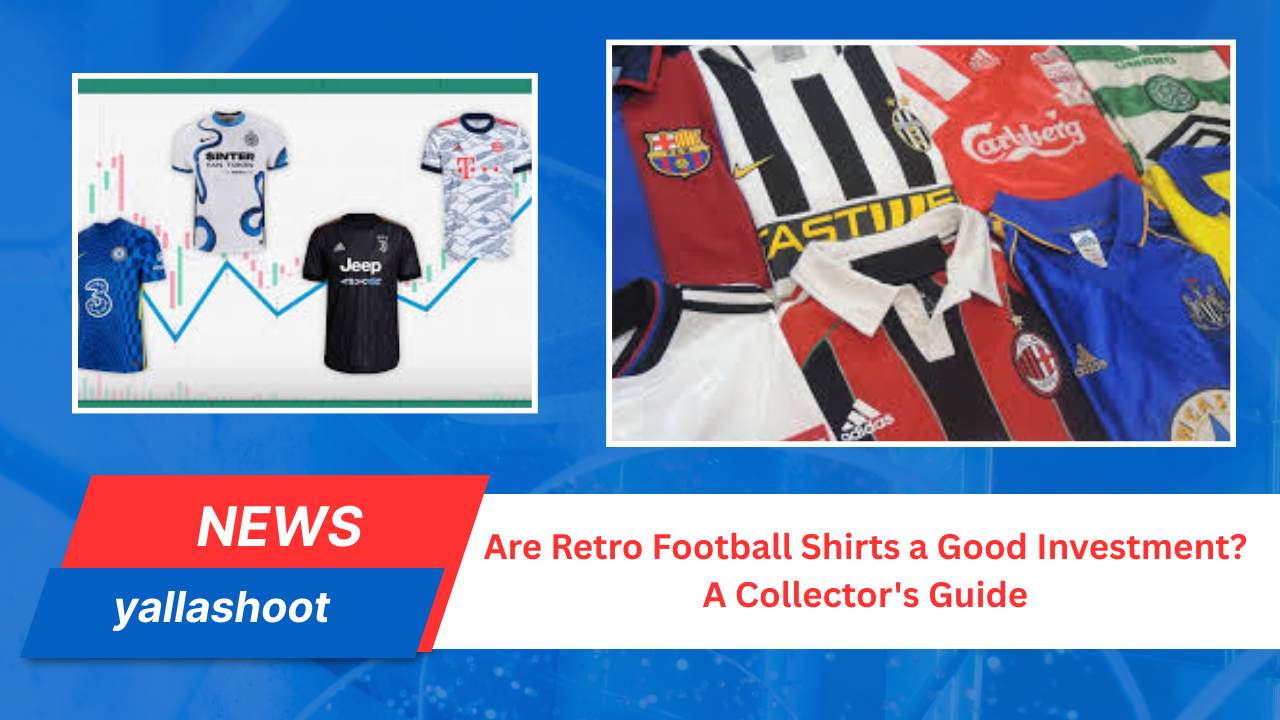
FAQs
Are all retro football shirts valuable?
No, only rare, well-preserved, and historically significant jerseys appreciate significantly.
How do I authenticate a rare jersey?
Check tags, stitching, and provenance. Professional authentication services provide certificates.
Should I wear or store my retro shirts?
For investment, storage is recommended. For casual use, handle with care to maintain condition.
What are the best resources to track shirt valuation?
Auction records, collector forums, and trusted memorabilia retailers.
Can retro shirts lose value over time?
Yes, shifts in demand, market saturation, or shirt damage can lower value.
Conclusion
So, Are Retro Football Shirts a Good Investment? The answer depends on perspective. For fans, they’re priceless memories. For investors, carefully selected shirts—rare, authentic, and tied to legendary players—can appreciate in value.
Ultimately, retro shirts are both a cultural passion and a financial opportunity. When chosen wisely, stored properly, and authenticated carefully, they can be one of the most rewarding investments in sports memorabilia.
read also: Football Economic Impact: Boosting Local Globally 2024