

Have you ever wondered how much stoppage time was added in a match and why those extra minutes felt like an eternity? This question has puzzled football fans for decades. Supporters wait anxiously at the 90th minute, watching the referee raise the electronic board that could signal two minutes, five minutes, or sometimes even ten. That number often determines whether fans leave the stadium celebrating or heartbroken.
But why do referees add different amounts of stoppage time? Is it only about fairness, or does it also serve the drama that football thrives on? In leagues like the Premier League, La Liga, or the Champions League, stoppage time has often changed history. Some even argue that certain teams seem to get “magical minutes” when they need them most.
Take Real Madrid, for example, a club famous for its historic comebacks in stoppage time. Legendary names like Zidane, Beckham, Figo, Ronaldo, and the leadership of Florentino Pérez shaped an era where extra minutes were not just time on the clock—they were moments of destiny. To follow the latest standings and see how stoppage time changes results, check the updated EPL table.
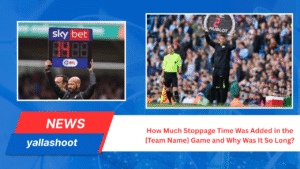
![How Much Stoppage Time Was Added in the [Team Name] Game and Why Was It So Long?](https://en.yallashootguide.net/wp-content/uploads/2025/08/Red-and-Teal-Modern-Sport-News-YouTube-Thumbnail-52-300x169.png "How Much Stoppage Time Was Added in the [Team Name] Game and Why Was It So Long? 1")
Understanding Stoppage Time in Football
The Official Rules of Timekeeping
A football match is officially 90 minutes long, divided into two halves. However, time lost due to substitutions, injuries, VAR checks, and deliberate time-wasting must be compensated. This is where stoppage time comes into play.
Who Decides on Stoppage Time?
The responsibility lies with the referee. Assistants may signal lost time, but the referee has the final say. Once the fourth official displays the number, it becomes official.
Why Added Time Often Feels Unfair
Fans sometimes believe referees add time strategically. If a big club is trailing, extra minutes may feel suspiciously long. This perception has fueled debates for years, especially in matches where dramatic goals occur at the very end.
Famous Matches with Long Stoppage Time
Real Madrid and the Legacy of Added Minutes
Real Madrid has been central to some of football’s most famous stoppage time goals. From late winners in La Liga to unforgettable Champions League nights, the club thrives in pressure moments. Explore the full Real Madrid history to understand why added time has often been associated with their success.
Zidane’s Era and Historic Late Goals
Zinedine Zidane, both as a player and coach, saw dramatic late goals define his legacy. From his Champions League final volley in 2002 to late substitutions as a manager, Zidane knew the power of added minutes.
Beckham and Figo: Icons Who Changed the Game
David Beckham’s pinpoint free kicks and Luis Figo’s creative brilliance often came alive when the team needed them most, particularly in the dying minutes of tight matches.
Ronaldo’s Influence and Florentino Pérez’s Galácticos Project
Ronaldo’s goals, combined with Pérez’s Galácticos vision, transformed Real Madrid into a team that could snatch victory at the last second. Late goals weren’t accidents; they were part of the club’s DNA.
Why Some Games Have Extra-Long Stoppage Time
VAR Decisions and Their Impact on Match Duration
The introduction of VAR has increased stoppage time significantly. A long review for an offside or penalty can add several minutes.
Injuries and Time-Wasting Tactics
Players feigning injury or goalkeepers taking excessive time during goal-kicks contribute to longer added time. Referees try to balance fairness by compensating.
Crowd Interruptions and External Factors
Pitch invasions, fan celebrations, or technical malfunctions sometimes force referees to extend matches.
Stoppage Time in Modern Football Competitions
Premier League Extra Time Cases
The Premier League has recently instructed referees to be stricter with stoppage time, leading to more 8–10 minute extensions. For full match schedules, check EPL table.
Champions League Drama in the Last Minutes
Champions League matches are often remembered for stoppage time goals. One example is Sergio Ramos’ famous equalizer against Atlético Madrid in 2014.
La Liga Matches Known for Long Extra Time
La Liga is notorious for dramatic endings. Real Madrid and Barcelona games, in particular, often extend beyond expectations, leading to unforgettable finishes.
Fans’ Perspective on Stoppage Time
Suspense and Entertainment Value
Fans love the thrill of added time. It creates unforgettable drama, with goals that become part of football folklore.
Frustration and Controversy
However, supporters also get frustrated when stoppage time feels unfair or inconsistent. Critics argue it allows referees too much influence.
How Media Covers Added Time Moments
Headlines that Shake the Football World
“Last-Minute Winner” or “Stoppage-Time Heartbreak” are phrases that dominate football headlines.
The Role of Commentators in Building Drama
Commentators amplify the tension, making stoppage time one of the most thrilling moments to watch live.
Comparison: Football vs Other Sports in Timekeeping
Basketball and Overtime
Unlike football, basketball has a stop-clock system, meaning time is managed more strictly.
Rugby and Extended Play
Rugby allows play to continue until the ball goes out, creating natural extensions similar to stoppage time in football.
Real Madrid History and the Magic of Late Goals
Legendary Comebacks in the Club’s Journey
From the 1980s to modern Champions League titles, Real Madrid’s reputation for comeback victories has often hinged on stoppage time heroics.
The Cultural Impact of Extra Time on Madridismo
For Madridistas, stoppage time represents belief until the very end. It’s part of the club’s philosophy—matches are never over until the final whistle. You can relive classic matches such as Bayern vs Real Madrid to see how late goals shaped rivalries.
Useful Resources for Football Fans
Discover global football stadiums where history is made.
Explore the best football apps to track live scores, stats, and stoppage time updates.
Learn more about match regulations from this trusted source
Frequently Asked Questions
Q1: Who decides how much stoppage time is added?
The referee makes the final decision, considering lost time from injuries, substitutions, and interruptions.
Q2: Why was stoppage time so long in the last World Cup?
Because FIFA instructed referees to strictly count every second of time-wasting, leading to longer added minutes.
Q3: Does stoppage time always match the time lost?
Not exactly. It’s an estimate based on the referee’s judgment.
Q4: Which team has benefited most from stoppage time?
Clubs like Real Madrid and Manchester United are famous for late goals, but statistics vary by season.
Q5: Is stoppage time the same in all competitions?
The principle is the same, but implementation differs slightly across leagues and tournaments.
Conclusion: Why Stoppage Time Will Always Be Special
In football, how much stoppage time was added is more than a technical detail. It’s a source of excitement, controversy, and unforgettable drama. Fans live for those final minutes, where legends are born and hearts are broken.
How Much Stoppage Time Was Added, From the magical nights of Real Madrid history to modern VAR-influenced matches, stoppage time will remain one of the most fascinating elements of the game. It ensures that in football, nothing is truly over until the last whistle.

